[A] computer is a stupid machine with the ability to do incredibly smart
things, while computer programmers are smart people with the ability to
do incredibly stupid things. They are, in short, a perfect match.
-Bill
Bryson
A computer cuts your work in half and gives you back the bloody stumps.
-Unattributed
A computer is only as good as the people who are employed to replace the
people who were made redundant by the computer.
-Unattributed
A computer lets you make more mistakes faster than any invention in
human history with the possible exceptions of handguns and tequila.
-Mitch
Ratcliffe
A crash reduces
Your expensive computer
To a simple stone.
-(If
Error Messages Were Haiku, www.pcpoetry.com)
A distributed system is one in which the failure of a computer you
didn't even know existed can render your own computer unusable.
-Leslie
Lamport
A lot of what appears to be progress is just so much technological
rococo.
-Bill Gray
A successful technology creates problems that only it can solve.
-Alan
Kay
All programmers are playwrights and all computers are lousy actors.
-Unattributed
All scientifically possible technology and social change predicted in
science fiction will come to pass, but none of it will work properly.
-Neil
Gaiman
All technology should be assumed guilty until proven innocent.
-David
Ross Brower
An idiot with a computer is a faster, better idiot.
-Rich Julius
Any idiot can use a computer. Many do.
-Unattributed
Any problem in computer science can be solved with another layer of
indirection. But that usually will create another problem.
-David
Wheeler
Any research done on how to efficiently use computers has been long lost
in the mad rush to upgrade systems to do things that aren't needed by
people who don't understand what they are really supposed to do with
them.
-Graham Reed
Any sufficiently advanced technology is indistinguishable from magic.
-Arthur
C. Clarke
Any sufficiently advanced technology is indistinguishable from a rigged
demo.
-James Klass
Artificial intelligence is the study of how to make real computers act
like the ones in movies.
-Unattributed
As far as we know, our computer has never had an undetected error.
-Unattributed
As practiced by computer science, the study of programming is an unholy
mixture of mathematics, literary criticism, and folklore.
-B.A.
Sheil
Asking if computers can think is like asking if submarines can swim.
-Unattributed
At the source of every error which is blamed on the computer you will
find at least two human errors, including the error of blaming it on the
computer.
-Unattributed
Bad command or file name. Good typing, though.
(Computer error
message)-Unattributed
Bad things come in threes. However, when dealing with computers, the
fourth thing is always the start of the next group of three.
-Unattributed
Cheese in an aerosol can is the greatest advance in technology since
fire.
-James Angove
Computer Science is no more about computers than astronomy is about
telescopes.
-E.W. Djikstra
Computer Science: A study akin to numerology and astrology, but lacking
the precision of the former and the success of the latter.
-Stan
Kelly-Bootle
Computers are like Old Testament gods; lots of rules and no mercy.
-Joseph
Campbell
Computers are man's attempt at designing a cat: it does whatever it
wants, whenever it wants, and rarely ever at the right time.
-Unattributed
Computers are such time-saving devices. In fact, I've just spent the
last three years trying to print out an envelope.
-Elayne Boosler
Computers can do better than ever what needn't be done at all. Making
sense is still a human monopoly.
-Marshall McLuhan
Computers can now keep a man's every transgression recorded in a
permanent memory bank, duplicating with complex programming and
intricate wiring a feat his wife handles quite well without fuss or
fanfare.
-Lane Olinghouse
Computers can still barely open a printer port, much less the pod bay
doors.
-Lee Gomes
Computers make it easier to do a lot of things, but most of the things
they make it easier to do don't need to be done.
-Andy Rooney
Don't anthropomorphize computers. They hate it when you do that.
-Unattributed
Don't explain computers to laymen. Simpler to explain sex to virgins.
-Robert
A. Heinlein
Engineers are always honest in matters of technology and human
relationships. That's why it's a good idea to keep engineers away from
customers, romantic interests, and other people who can't handle the
truth.
-Unattributed (From Engineers Explained)
Enter any eleven-digit prime number to continue.
-Unattributed (Computer command
prompt)
Even though today's technology provides us with mountains of data, it is
useless without judgment.
-Felix G. Rohatyn
Every time you turn on your new car, you're turning on 20
microprocessors. Every time you use an ATM, you're using a computer.
Every time I use a set top box or game machine, I'm using a computer.
The only computer you don't know how to work is your Microsoft computer,
right?
-Scott McNealy
For a list of all the ways technology has failed to improve the quality
of life, please press three.
-Alice Kahn
For a successful technology, reality must take precedence over public
relations, for Nature cannot be fooled.
-Richard P. Feynman,
in
his analysis of the Space Shuttle Challenger explosion. Academy Award
winner William Hurt portrays Dr. Feynman in "The
Challnger Disaster," a drama based on the late Nobel
Prize-winning theoretical physicist's final book, "What
Do You Care What Other People Think?" If you missed last
night's premiere, it will be rebroadcast again tonight at 9 pm on The
Science Channel.
Having a computer is like having a small, silicon version of Gary Busey
on your desk. You never know what's going to happen.
-Bill Maher
Humanity is acquiring all the right technology for all the wrong reasons.
-Buckminster
Fuller
I have a computer, a vibrator and pizza delivery. Why should I leave the
house?
-Unattributed
I have always wished that my computer would be as easy to use as my
telephone. My wish has come true. I no longer know how to use my
telephone.
-Bjarne Stroustrup
I may be just an empty flesh terminal relying on technology for all my
ideas, memories and relationships, but I am confident that all of that,
everything that makes me a unique human being, is still out there,
somewhere, safe in the theoretical storage space owned by giant
multi-national corporations.
-Stephen Colbert
I think computer viruses should count as life. I think it says something
about human nature that the only form of life we have created so far is
purely destructive. We've created life in our own image.
-Stephen
Hawking
I think everyone in this country should learn to program a computer.
Everyone should learn a computer language because it teaches you how to
think. I think of computer science as a liberal art.
-Steve Jobs
I think it is time we learned the lesson of our century: that the
progress of the human spirit must keep pace with technological and
scientific progress, or that spirit will die. It is incumbent on our
educators to remember this; and music is at the top of the spiritual
must list.
-Leonard Bernstein
I was shocked upon viewing Internet porn while surfing the Web last
night. Then I realized my wife must have wired the mouse on our computer.
-John
Alejandro King (The Covert Comic)
If moral behavior were simply following rules, we could program a
computer to be moral.
-Samuel P. Ginder
If the Catholic church couldn't stop Galileo, then governments won't be
able to stop things now.
-Carlo
de Benedetti (re: regulation of information technology.)
If we had a reliable way to label our toys good and bad, it would be
easy to regulate technology wisely. But we can rarely see far enough
ahead to know which road leads to damnation. Whoever concerns himself
with big technology, either to push it forward or to stop it, is
gambling in human lives.
-Freeman Dyson
If you can't beat your computer at chess, try kickboxing.
-Unattributed
If you don't know how to do something, you don't know how to do it with
a computer.
-Unattributed
If you put tomfoolery into a computer, nothing comes out but tomfoolery.
But this tomfoolery, having passed through a very expensive machine, is
somehow ennobled, and no one dares to criticize it.
-Pierre Gallois
Imagine if every Thursday your shoes exploded if you tied them the usual
way. This happens to us all the time with computers, and nobody thinks
of complaining.
-Jeff Raskin
In a way, staring into a computer screen is like staring into an
eclipse. It's brilliant and you don't realize the damage until it's too
late.
-Bruce Sterling
In all technologically 'advanced' countries, fashion has replaced
tradition, so that involuntary membership in a society can no longer
provide a feeling of community.
-W.H. Auden
In computer science, we stand on each other's feet.
-Brian K. Reid
In the computer business, there are three kinds of lies: lies, damned
lies, and benchmarks.
-Unattributed
In the long run, everything is a toaster.
-Bruce
Greenwald (on innovative technologies)
In the old days, writers used to sit in front of a typewriter and stare
out of the window. Nowadays, because of the marvels of convergent
technology, the thing you type on and the window you stare out of are
now the same thing.
-Douglas Adams
It is only when science asks why, instead of simply describing how, that
it becomes more than technology. When it asks why, it discovers
Relativity. When it only shows how, it invents the atomic bomb, and then
puts its hands over its eyes and says, "My God, what have I done?"
-Ursula
K. LeGuin
It's a truism in technological development that no silver lining comes
without its cloud.
-Bruce Sterling
Let's be frank, the Italians' technological contribution to humankind
stopped with the pizza oven.
-Bill Bryson
Levitt's First Law of Information Technology: If it's free, adopt it.
-Unattributed
Man is the best computer we can put aboard a spacecraft... and the only
one that can be mass produced with unskilled labor.
-Wernher von
Braun
Memory is like an orgasm. It's a lot better if you don't have to fake
it.
-Seymour Cray (re: computer virtual memory)
Misuse of reason might yet return the world to pre-technological night;
plenty of religious zealots hunger for just such a result, and are happy
to use the latest technology to effect it.
-A.C. Grayling
Most undergraduate degrees in computer science these days are basically
Java vocational training.
-Alan Kay
My perception was/is that while the rest of the computer world was
striving for Fault Tolerant Software, Microsoft was working on Fault
Tolerant Users.
-John Robinson
Never let a computer know you're in a hurry.
-Unattributed
Never trust a computer you can't throw out a window.
-Steve Wozniak
Once a new technology rolls over you, if you're not part of the
steamroller, you're part of the road.
-Stewart Brand
Our entire much-praised technological progress, and civilization
generally, could be compared to an axe in the hand of a pathological
criminal.
-Albert Einstein
Part of the inhumanity of the computer is that, once it is competently
programmed and working smoothly, it is completely honest.
-Isaac
Asimov
PCMCIA stands for either Personal Computer Memory Card International
Association or People Can't Memorize Computer Industry Acronyms.
-Unattributed
Read, read, read and put away computers. Forget the Internet, that's all
crap.
-Ray Bradbury
Reading computer manuals without the hardware is as frustrating as
reading sex manuals without the software. In both cases the cure is
simple though usually very expensive.
-Arthur C. Clarke
Science is everything we understand well enough to explain to a
computer. Art is everything else.
-Donald Knuth
Science is to computer science as hydrodynamics is to plumbing.
-Stan
Kelly-Bootle
Some technologies do their job perfectly and tend to stick around. The
spoon is one example, the lawn-roller another. Paper may well be a third.
-Unattributed
(From The Economist)
Technological man can't believe in anything that can't be measured,
taped, or put into a computer.
-Clare Boothe Luce
Technological progress has merely provided us with more efficient means
for going backwards.
-Aldous Huxley
Technology [is] the knack of so arranging the world that we need not
experience it.
-Max Frisch
Technology frightens me to death. It's designed by engineers to impress
other engineers, and they always come with instruction booklets that are
written by engineers for other engineers- which is why almost no
technology ever works.
-John Cleese
Technology is anything that wasn't around when you were born.
-Alan
Kay
Technology is dominated by two types of people: those who understand
what they do not manage, and those who manage what they do not
understand.
-Unattributed
Technology is not in itself opposed to spirituality and to religion. But
it presents a great temptation.
-Thomas Merton
Technology is really civilization, let's face it.
-Arthur C. Clarke
Technology is so much fun but we can drown in our technology. The fog of
information can drive out knowledge.
-Daniel J. Boorstin
Technology makes it possible for people to gain control over everything,
except over technology.
-John Tudor
Technology today is the campfire around which we tell our stories.
There's this attraction to light and to this kind of power, which is
both warm and destructive.
-Laurie Anderson
That's the thing about people who think they hate computers. What they
really hate is lousy programmers.
-Jerry Pournelle
The British don't make computers because they never figured out how to
make them leak oil.
-Unattributed
The Buddha resides as comfortably in the circuits of a digital computer
or the gears of a cycle transmission as he does at the top of a mountain.
-Robert
Pirsig
The computer industry has frequently borrowed from mythology: Witness
the sprites in computer graphics, the demons in artificial intelligence,
and the trolls in the marketing department.
-Jeff Meyer
The computer industry is a chicken on growth hormones, sloshing around
in a nutrient bath with its head cut off.
-Peter Sugarman
The computer is a moron.
-Peter Drucker
The computer revolution hasn't started yet. Don't be misled by the
enormous flow of money into bad defacto standards for unsophisticated
buyers using poor adaptations of incomplete ideas.
-Alan Kay
The computer saves man a lot of guesswork, but so does the bikini.
-Evan
Esar
The difference between e-mail and regular mail is that computers handle
e-mail, and computers never decide to come to work one day and shoot all
the other computers.
-Jamais Cascio
The entire body of computer science can be viewed as nothing more than
the development of efficient methods for the storage, transportation,
encoding, and rendering of pornography.
-Unattributed
The fault lies not with our technologies but with our systems.
-Roger
Levian
The first time a person gets a screwdriver, he's going to go around the
house tightening all the screws, whether they need it or not. There's no
reason a computer will not be similarly abused.
-Theodore K. Robb
The goal of Computer Science is to build something that will last at
least until we've finished building it.
-Unattributed
The human race has today the means for annihilating itself-either in a
fit of complete lunacy, i.e., in a big war, by a brief fit of
destruction, or by careless handling of atomic technology, through a
slow process of poisoning and of deterioration in its genetic structure.
-Max
Born
The Internet was done so well that most people think of it as a natural
resource like the Pacific Ocean, rather than something that was
man-made. When was the last time a technology with a scale like that was
so error-free? The Web, in comparison, is a joke. The Web was done by
amateurs.
-Alan Kay
The most likely way for the world to be destroyed, most experts agree,
is by accident. That's where we come in; we're computer professionals.
We cause accidents.
-Nathaniel Borenstein
The newest computer can merely compound, at speed, the oldest problem in
the relations between human beings, and in the end the communicator will
be confronted with the old problem, of what to say and how to say it.
-Edward
R. Murrow
The only thing God didn't do to Job was give him a computer.
-I.F.
Stone
The only truly portable computer language is profanity.
-Unattributed
The power to hurt... has evolved in a direct relationship to
technological advancement.
-Roger Zelazny
The protean nature of the computer is such that it can act like a
machine or like a language to be shaped and exploited.
-Alan Kay
The real problem of humanity is the following: we have paleolithic
emotions; medieval institutions; and god-like technology. And it is
terrifically dangerous, and it is now approaching a point of crisis
overall.
-E.O. Wilson
The Republic of Technology where we will be living is a feedback world.
-Daniel
J. Boorstin
The Web brings people together because no matter what kind of a twisted
sexual mutant you happen to be, you've got millions of pals out there.
Type in "Find people that have sex with goats that are on fire" and the
computer will ask, "Specify type of goat."
-Richard Jeni
The world is just filling up with more and more idiots! And the computer
is giving them access to the world! They're spreading their stupidity!
At least they were contained before- now they're on the loose everywhere!
-Harlan
Ellison
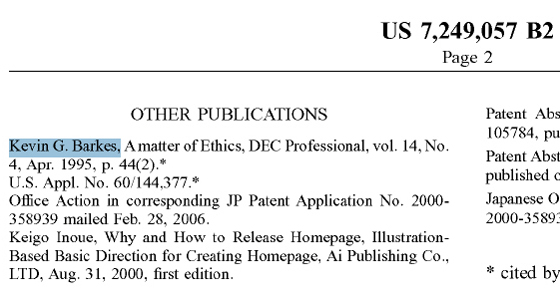
There are more computers running Windows than VMS. There are also more
cockroaches than humans.
-Kevin G. Barkes
There are two kinds of computer users: those who have lost data and
those who will lose data.
-Unattributed
There is a computer disease that anybody who works with computers knows
about. It's a very serious disease and it interferes completely with the
work. The trouble with computers is that you play with them.
-Richard
P. Feynman
There is an evil tendency underlying all our technology- the tendency to
do what is reasonable even when it isn't any good.
-Robert Pirsig
There is no data to support that computers make business more
productive... most companies have merely found faster and cheaper ways
to do dumb things.
-Gary Loveman
There is no escaping from ourselves. The human dilemma is as it has
always been, and we solve nothing fundamental by cloaking ourselves in
technological glory.
-Neil Postman
This computer makes me all frowny with pure nougat-filled hatred!
-Jhonen
Vasquez
Unlike human beings, computers possess the truly profound stupidity of
the inanimate.
-Bruce Sterling
We are reaching the stage where the problems we must solve are going to
become insoluble without computers. I do not fear computers. I fear the
lack of them.
-Isaac Asimov
We are stuck with technology when what we really want is just stuff that
works.
-Douglas Adams
We build our computer [systems] the way we build our cities: over time,
without a plan, on top of ruins.
-Ellen Ullman
We've arranged a civilization in which most crucial elements profoundly
depend on science and technology. We have also arranged things so that
almost no one understands science and technology. This is a prescription
for disaster. We might get away with it for a while, but sooner or later
this combustible mixture of ignorance and power is going to blow up in
our faces.
-Carl Sagan
While modern technology has given people powerful new communication
tools, it apparently can do nothing to alter the fact that many people
have nothing useful to say.
-Lee Gomes
Whom computers would destroy, they must first drive mad.
-Unattributed
Why is it drug addicts and computer aficionados are both called users?
-Clifford
Stoll
Without software, a computer is just a lump of plastic- whereas with
software, it's a lump of plastic that can permanently destroy critical
data.
-Dave Barry
Writing is a slow and a difficult process mentally. How you physically
render the words onto a screen or a page doesn't help you. I'll give you
this example. When words had to be carved into stone, with a chisel, you
got the Ten Commandments. When the quill pen had been invented and you
had to chase a goose around the yard and sharpen the pen and boil some
ink and so on, you got Shakespeare. When the fountain pen came along,
you got Henry James. When the typewriter came along, you got Jack
Kerouac. And now that we have the computer, we have Facebook. Are you
seeing a trend here?
-P.J. O'Rourke
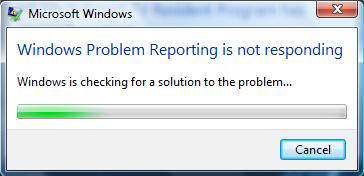
Yesterday it worked
Today it is not working
Windows is like that
-(If
Error Messages Were Haiku, www.pcpoetry.com)
-----
NFPE- NON-FATAL PROCESSING ERROR:
ITC - IGNORING THE CONTRACTOR
Remember
that potential race condition I warned you about in the coding
implementation meetings? You know, the one you condescendingly dismissed
in front of your in-house staff of snickering, cognitively challenged
ex-baristas? The condition that could never happen 'in the real world'
and therefore could be ignored?
Guess what, Skippy? Some
other process on the system- perhaps one from that odd location called
'reality'- just changed the offset into the next available customer
acccount number table.
Fortunately for you, I ignored your
explicit refusal to authorize the time necessary to write the code to
lock and release the table offset. I did it on my own time out of a
sense of professional pride and responsibility. If I hadn't, this
application- and, through the resulting series of cascading failures,
your entire production system- would have reduced this server to a
puddle of molten silicon.
The arcane segmentation fault it would have thrown would have corrupted
the entire account number sequencing mechanism. Your crack team of
outsourced, clueless code monkeys would have taken weeks to identify the
cause, let alone correct it. And who are we kidding? You would have been
on the phone to me in under an hour, pleading- no, demanding- that I
supply a patch, immediately and at no charge, because it's in a part of
the code that I wrote and, therefore, is my fault, despite the fact it
behaved exactly in the inane manner you decreed.
I would
have then directed you here: http://tinyurl.com/nak5n7c
It's
a capture of that portion of the aforementioned video conference meeting
where I warned you about this problem and spent ten minutes describing
situations in which the condition could occur- and your response,
accompanied by the smirks and giggles of your obsequious minions.
This
message will appear in the production run log file only this one time
and will probably not be seen by anyone, since you only check log files
when something crashes and burns. You never check for non-fatal
processing errors that should be corrected but aren't because that would
be contrary to your policy of ignoring the smoke emanating from your hat
until your hair ignites.
Anyway, in the unlikely event
someone does read this, you should also check the report date function
two modules down. As written, the end of month summary publication will
at some point display a cover date of February 30. I pointed this out in
our last meeting and would have corrected it, but it required access to
another function in another module which I couldn't access. You said
you'd have Bjorn fix it. Let me tell you about Bjorn. His real name is
Walter. He changed it to Bjorn because he thought it would improve his
chances of being hired. Walter is only vaguely aware of his surroundings
and, if you look right now, is wearing mis-matched socks.
You're
welcome.
And I'm still waiting for that last check.
Categories:
Computers,
Quotes on a topic,
Technology
Home
KGB Stuff
Commentwear
E-Mail KGB
Donate via PayPal
Older entries, Archives and Categories
Top of page